
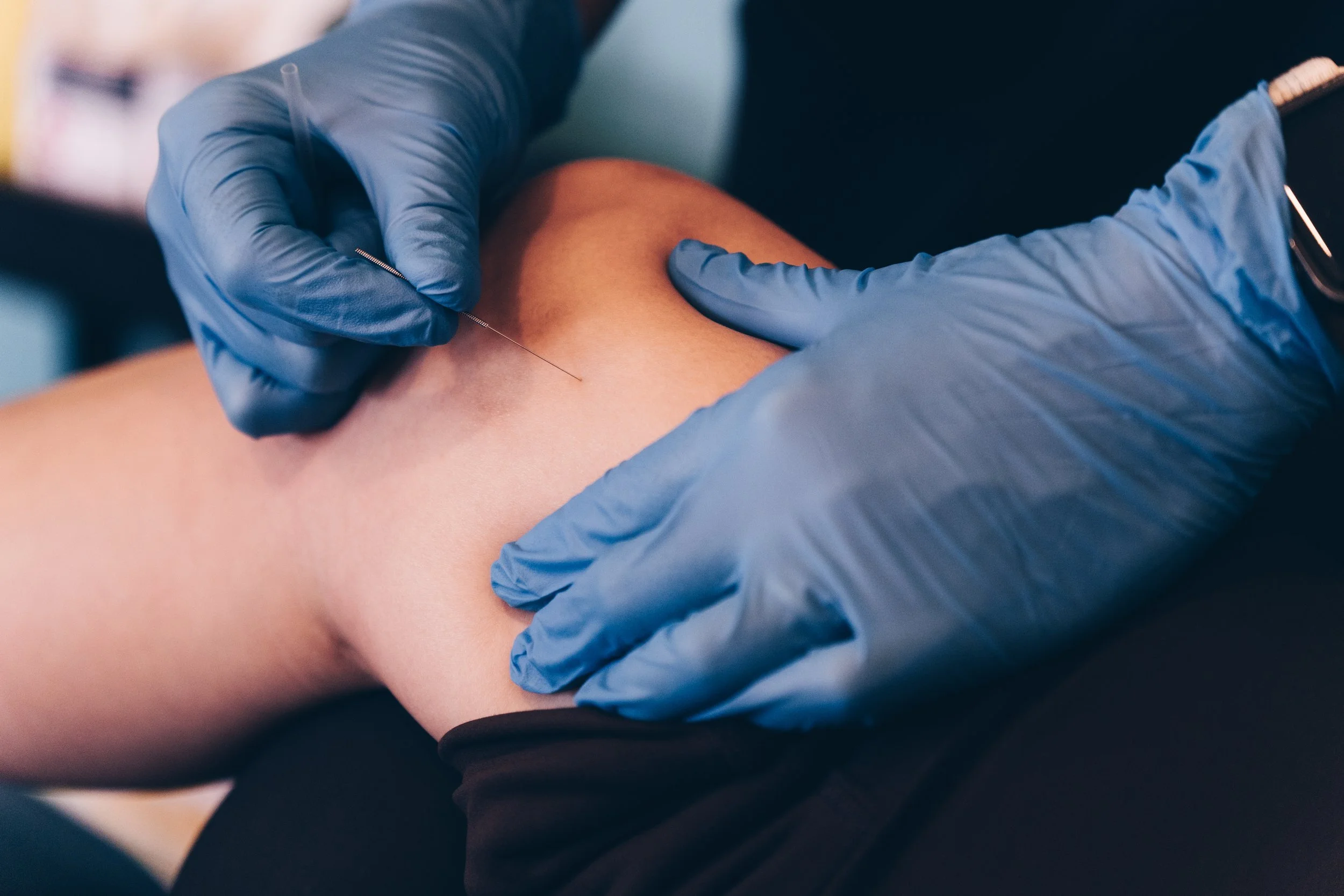
Dry Needling
Sometimes, manual stretching and massage aren't enough to reach the deep-seated tension held within your muscles. At PHYX, we offer Dry Needling - a modern, science-based intervention designed to "reset" overactive muscles and accelerate your recovery from chronic pain and sports injuries.
What is Dry Needling?
Dry needling involves the insertion of fine, sterile needles into myofascial trigger points - commonly known as "muscle knots." Unlike acupuncture, which is based on traditional Chinese medicine and energy flow (Qi), dry needling is rooted in Western anatomical and neurophysiological principles.
The goal is simple: to stimulate the neuromuscular system to release tension and improve blood flow.
How It Works
When a needle is inserted into a trigger point, it often elicits a Local Twitch Response (LTR). This involuntary contraction is a sign that the muscle is beginning to relax.
Desensitisation: The needle helps "quiet" the sensory nerves that are sending pain signals to your brain.
Increased Circulation: The micro-trauma caused by the needle triggers a healing response, bringing fresh, oxygenated blood to the area.
Mechanical Release: It physically breaks the cycle of the "knot" that keeps the muscle in a shortened, painful state.
Conditions That Respond Well to Dry Needling
Dry needling is rarely a standalone treatment; we integrate it into your broader physiotherapy plan to enhance the results of exercise and manual therapy. It is highly effective for:
Chronic Neck & Back Pain: Releasing the deep paraspinal muscles.
Tension Headaches: Targeting the suboccipital muscles at the base of the skull.
Sports Injuries: Managing "jumper's knee," tennis elbow, and hamstring strains.
Fibromyalgia & Myofascial Pain: Reducing widespread muscle sensitivity.
Jaw Pain (TMJ): Releasing the powerful muscles of mastication.
-
Many patients are nervous about needles, but the process is generally very well-tolerated.
The Sensation: You may feel a slight "pinprick" or a deep ache. If a twitch response occurs, it can feel like a brief muscle cramp.
The Duration: Needles may remain in place for 30 seconds to several minutes depending on the goal.
The Aftermath: It is common to feel some muscle soreness—similar to the feeling after a heavy workout—for 24 to 48 hours. Drinking plenty of water and gentle movement helps this pass quickly.