
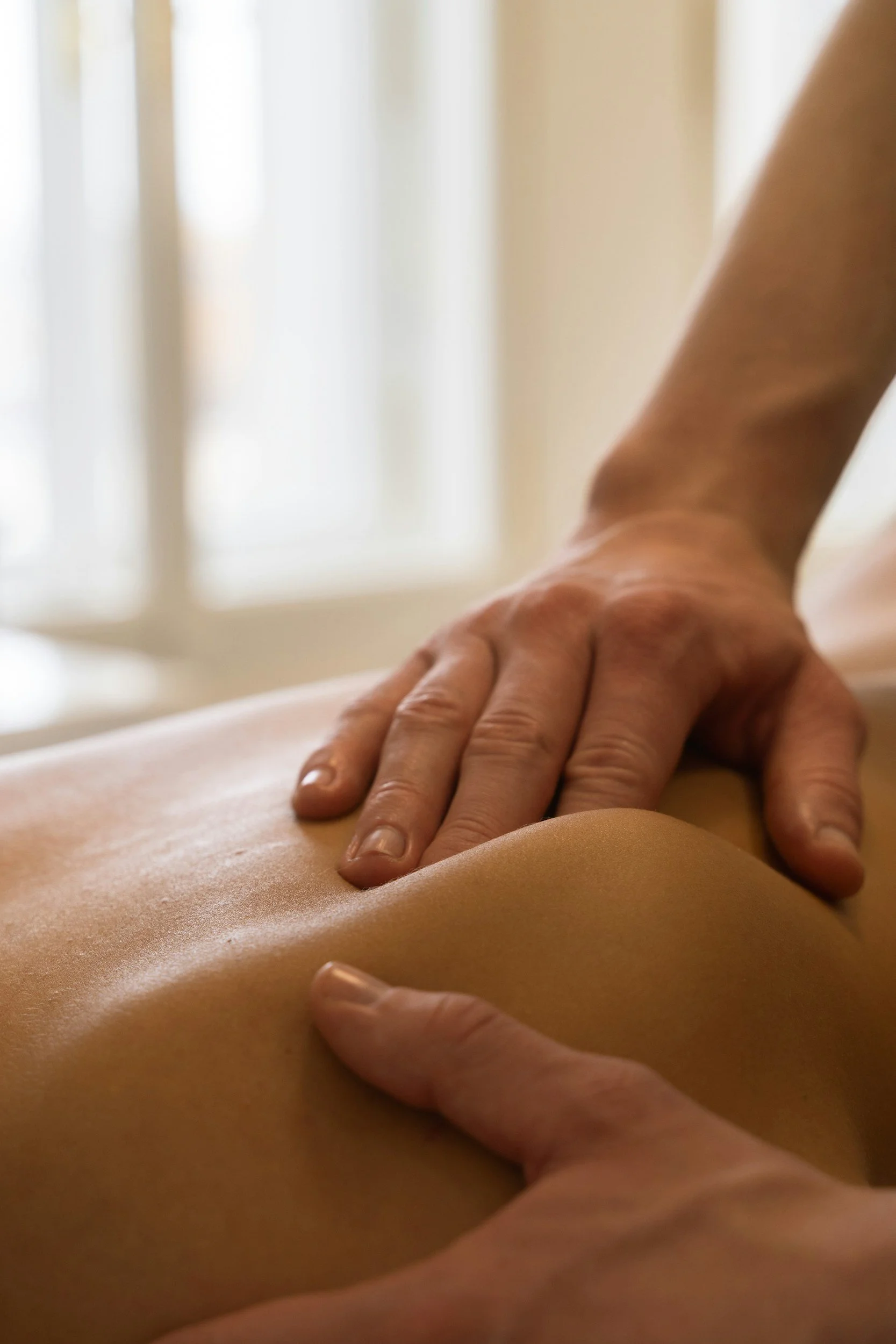
Sports Massage
Recovery, Performance, and Prevention
While physiotherapy focuses on clinical rehabilitation, our Sports Massage services are designed to manage the physical toll of training, reduce muscle tension, and keep you moving at your peak.
Whether you are tapering for a marathon, recovering from a heavy lifting session, or stuck at a desk dreaming of your next workout, our therapists use targeted techniques to restore your body’s natural balance.
How Sports Massage Benefits You
Sports massage goes deeper than a standard "spa" massage. It is a functional treatment that targets specific muscle groups and connective tissues used in your sport or daily life.
Accelerated Recovery: By increasing localized blood flow, massage helps flush out metabolic waste and delivers oxygen-rich blood to fatigued muscles.
Improved Flexibility: We target "trigger points" and adhesions (muscle knots) to increase your active range of motion and stride length.
Injury Prevention: Regular maintenance identifies tight areas before they turn into compensatory patterns or full-blown strains.
Stress & Cortisol Reduction: Lowering physical tension calms the nervous system, allowing for deeper sleep and better overall recovery.
Our Specialised Techniques
Our therapists adapt their pressure and style based on your training cycle.
Deep Tissue Work: Breaking down chronic tension and scar tissue in deeper muscle layers.
Trigger Point Release: Releasing specific "knots" that cause referred pain or restricted movement.
Myofascial Release: Stretching the connective tissue (fascia) to improve overall fluid movement.
Pre-Event Flush: Light, brisk strokes to stimulate circulation and "wake up" the muscles before a race.
When Should You Book?
You don’t need to be "broken" to benefit from a sports massage. Most of our clients find success with these three timing strategies:
Maintenance (Every 2–4 weeks): To manage the cumulative stress of regular training.
Post-Event (24–72 hours after): To soothe delayed onset muscle soreness (DOMS) and kickstart the healing process.
The "Niggle" Phase: When you feel a tightness that isn't quite an injury yet, but is affecting your form.
-
Pre-Event Massage
To create a state of readiness of the muscle
Stimulate circulation
Generate fresh supply of oxygenated blood to a specific area
Reduce tension and increase flexibility in muscle groups
Maintenance / Preventative Massage
To support rehabilitation period during rest from heavy training
Concentrates on muscles that have been used or are going to be used
Reduces potential soreness
Spreads muscle fibres to minimise fascial adhesions
Muscle Energy Techniques
To mobilise restricted joints
To lengthen tense muscles and fascia
To improve circulation, respiration, and neuromuscular relationships
Neuro Muscular Techniques / Trigger Point Release
Treat key trigger point areas to resolve referred pain patterns